.svg)
.svg)
.svg)
.jpg)
.jpg?width=1200&length=1200&name=Slide%202%20(1).jpg)
How to Fund a Playground Project: Start With a Clear Plan
Every community deserves a space where children can run, climb, imagine, and thrive. Turning that vision into reality takes more than enthusiasm, though. It takes a plan.
At Play & Park Structures, we believe funding a playground project is really about investing in your community's future. That's why we've developed the Healthy Kids Initiative — a program that provides funding support to qualifying applicants — and why we see ourselves as a resource for school administrators, parks and recreation directors, church leaders looking to bring joyful play on-site, and others ready to move playground projects forward with confidence.
[Do you qualify for playground funding through the Healthy Kids Initiative? Find out.]
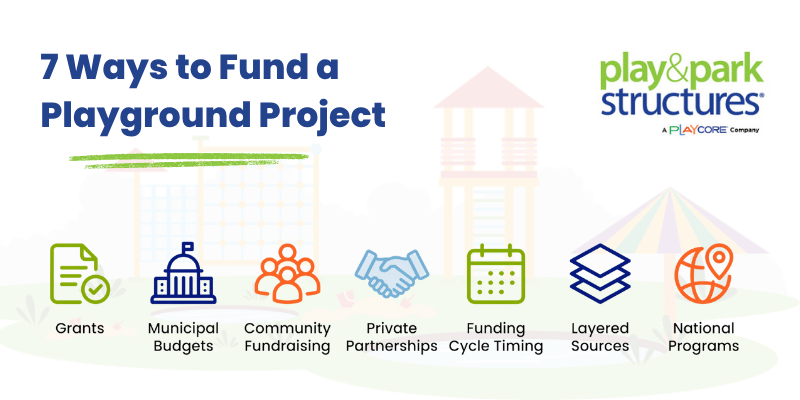
7 Practical Ways to Fund a Playground Project
1. Use Public and Private Grants Strategically

Grants remain one of the most powerful ways to fund a playground project, and a strong application can make all the difference. Be clear, as grant reviewers want to see how your space will serve the community, support whole-child development, and create lasting impact.
Programs like the Healthy Kids Initiative work the same way, giving communities a grant-style path to stretch their resources toward inclusive play. The current application window closes June 30. In addition, our guide on how to write a grant request for a playground walks you through the process, and you can even reference our sample grant letter as a starting point.
2. Align With Municipal or Organizational Budgets
 Playground projects that connect to broader community goals — downtown revitalization, park improvements, school facility upgrades — are far more likely to gain support.
When your project aligns with an existing capital plan, it becomes part of a larger vision. Parks departments, school districts, and municipalities often prioritize initiatives that serve multiple objectives at once. The earlier you introduce your project into those planning conversations, the better your chances of moving forward.
3. Build Momentum Through Community Fundraising
 There's something special about a community coming together to build a space for its children. Fundraising sparks shared ownership and connection in ways that other funding sources simply can't.
The most successful campaigns stay focused on impact. When families, neighbors, and local businesses can see how a thoughtfully designed play space will bring people together, support grows naturally. Share the story of why this space matters and watch your community rally behind it.
4. Secure Private Partnerships and Sponsorships
 Private partnerships can play a meaningful role in bringing a playground project to life, especially when your mission aligns with a partner's values.
Local businesses, healthcare organizations, and nonprofits are often eager to invest in projects that promote health, inclusive play, and community connection. The Healthy Kids Initiative is one example of how layered partnerships make playground investment more accessible. These relationships can extend well beyond the initial build, creating long-term engagement and shared pride in the spaces where children thrive.
[The Healthy Kids Initiative application window closes June 30, 2026.]
5. Plan Early Around Funding Cycles
 One of the most overlooked strategies? Timing. Grants, budget approvals, and funding programs all operate on defined cycles, and organizations that plan early have more opportunities to apply, adjust, and succeed.
We encourage every organization to think about funding from the very beginning of the planning process. When project scope, design, and funding strategy develop together, decisions become more informed and costly changes become far less likely.
6. Combine Multiple Funding Sources
 Relying on a single funding source creates unnecessary risk. If that one stream is delayed or falls through, your entire timeline shifts.
The strongest playground projects we see are funded through a combination of grants, municipal support, community fundraising, and private partnerships working together. This layered approach creates flexibility and keeps projects moving forward, even when one piece takes longer than expected.
7. Look Beyond Traditional Playground Funding Sources
 Many organizations focus only on the most visible funding options and miss valuable programs designed to support exactly this kind of community investment.
National and regional initiatives focused on health, youth development, and community wellness can provide meaningful funding, especially when your project aligns with their goals. Programs like the Healthy Kids Initiative help communities stretch their available resources and bring inclusive play spaces to life. If your organization is exploring a playground project, the current application window closes June 30, making now the ideal time to apply.
Playgrounds also create real economic impact in your community, which can strengthen your case with funders and decision-makers alike.
Avoid These Common Mistakes When Funding a Playground Project
Even strong funding strategies can be slowed by avoidable missteps. The most common one is underestimating the full project scope. Playground projects include more than equipment — site preparation, installation, accessibility considerations, and long-term maintenance all contribute to the overall cost. Projects that account for these factors early are more likely to stay on track, and including a contingency buffer helps absorb unexpected needs.
The other common slowdown is delayed stakeholder involvement. Projects benefit from early alignment among decision-makers, community members, and operational teams. When stakeholders contribute from the start, plans become easier to support and fund. Late-stage input often leads to revisions that stall momentum just when projects need to move.
Frequently Asked Questions on How to Fund a Playground Project
What is the best way to fund a playground project?
We recommend combining multiple funding sources: grants, organizational budgets, community fundraising, and private partnerships. A layered approach reduces risk and gives your project the flexibility to keep moving forward, even if one source takes time to finalize.
How long does it take to fund a playground project?
Most playground projects take several months to over a year to fund fully. Timelines vary depending on grant cycles, approval processes, and community engagement. Starting early and aligning your funding strategy with your project plan from the beginning makes a real difference.
Are there current funding opportunities for playground projects?
Yes. Programs like the Healthy Kids Initiative support communities looking to create inclusive, thoughtfully designed play spaces. The current application window closes June 30, so we encourage organizations to explore this opportunity now. Your Play Consultant can help you determine if your project qualifies.
Making the Most of Every Dollar
Funding a playground project is about building a space where every child can play, grow, and belong. Organizations that plan early, diversify their funding, and stay connected to their mission are the ones that bring their vision to life.
We believe every community deserves a play space customized to fit its unique needs, whether that's a neighborhood park, a church playground, or a school campus designed for inclusive, whole-child play.
With the Healthy Kids Initiative application window open through June 30, there's never been a better time to take the first step. Your local Play Consultant can help you identify funding opportunities, plan your project timeline, and design a space where joy and connection thrive.
Ready to create a play space your community will love? Let's build something together.