.svg)
.svg)
.svg)


Autism Awareness Month: Designing Playgrounds for Every Child
Every April, communities around the world recognize Autism Awareness Month, a time dedicated to understanding, supporting, and celebrating individuals on the autism spectrum.
For many families, one of the most meaningful parts of childhood is play. Yet traditional playgrounds haven’t always been designed with the needs of children with autism in mind. That’s why inclusive playground design is so important—because every child deserves the opportunity to play, explore, and connect with others.
At Play & Park Structures, creating inclusive play environments has long been a priority. Through a partnership with renowned autism advocate and scientist Dr. Temple Grandin, the company has helped bring new insights into how playground design can support children with sensory needs.
Understanding Play Through the Lens of Autism
Children on the autism spectrum may experience the world differently, especially when it comes to sensory input such as sound, motion, and touch. Thoughtful playground design can help create environments that are both engaging and comfortable.
Dr. Temple Grandin, who was diagnosed with autism as a child, has spent decades advocating for better understanding of sensory processing and how environments can support neurodivergent individuals.
Through collaboration with Play & Park Structures, Dr. Grandin has provided insight into how movement, structure, and sensory experiences can influence how children interact with playground equipment.
These insights help designers create play spaces that are welcoming and accessible to children of all abilities.
The Temple Trolley: A Playground Innovation Inspired by Experience
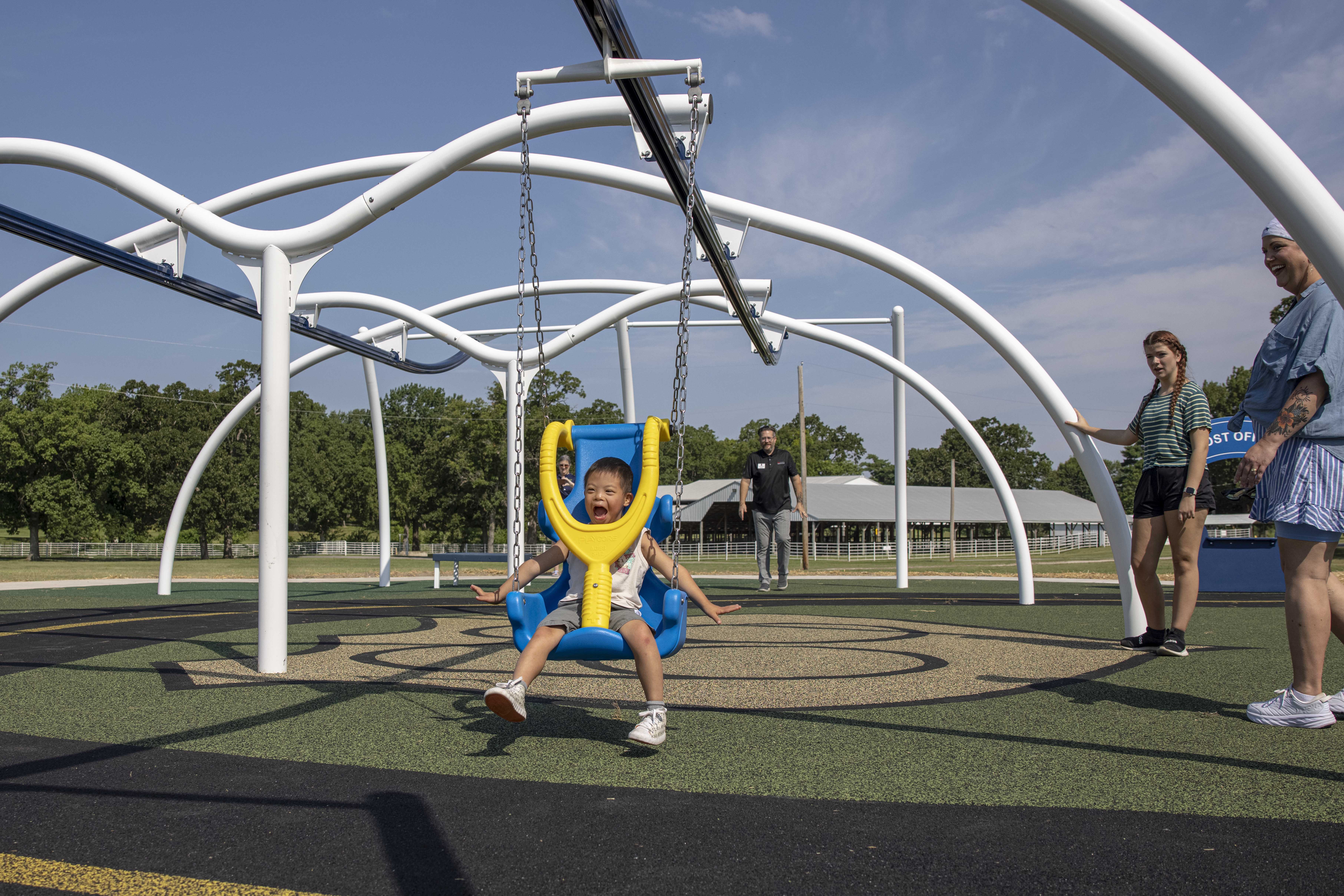
One of the results of this partnership is the Temple Trolley, a unique sensory play experience developed by Play & Park Structures in collaboration with Dr. Grandin.
Inspired by a piece of equipment Dr. Grandin enjoyed as a child, the Temple Trolley combines gliding, swinging, and spinning motions along a track.
This multi-sensory movement can provide calming and enjoyable stimulation for many children on the autism spectrum. The design offers:
- A smooth gliding ride along a track
- A free-spinning seat that rotates 360 degrees
- Accessible launch points on both ends of the ride
- Optional supportive seating for additional stability
For many children with sensory needs, motion-based experiences like this can be both exciting and regulating, helping them engage in play comfortably.
Building Playgrounds That Welcome Everyone
Inclusive playground design goes far beyond adding a single piece of equipment. It involves creating environments where children of all abilities can participate together.
Playgrounds designed with inclusivity in mind may include:
- Sensory-rich play elements
- Quiet spaces for children who need breaks
- Accessible pathways and entry points
- Equipment that encourages cooperative play
By incorporating these features, communities can create playgrounds where children with autism feel welcomed rather than overwhelmed.
The Importance of Inclusive Play
Play is essential to childhood development. It helps children build confidence, develop social skills, and explore their creativity.
When playgrounds are designed inclusively, they allow children of all abilities to:
- Play side by side with peers
- Experience movement and sensory engagement
- Build friendships and social connections
- Feel included in community spaces
These experiences can make a lasting difference for families who are often searching for environments where their children feel comfortable and supported.
Celebrating Autism Awareness Through Play
Autism Awareness Month is an opportunity for communities to reflect on how spaces can be designed to support everyone.
Through partnerships with experts like Dr. Temple Grandin, Play & Park Structures continues working to create playground environments that embrace inclusion, celebrate differences, and invite every child to play.
Because when playgrounds are designed for everyone, the entire community benefits.